Summary: Conjunctivitis occurs when the membrane covering the white part of the eye gets pinkish with irritation, causing discomfort and inflammation. Some of the most common causes of it are viruses and bacteria.
Eyes Red, Itchy, and Contagious? Your Quick Guide to Pink Eye in Kids!
The risk is higher for kids below 7 years old.
What if the first thing you notice in the morning… is that something’s wrong with your child’s eyes?
No brightness; no smile. Just irritation, crusty discharge and a strange pink tint you can’t ignore.
And in seconds, your mind spirals – Is it an infection? Is it serious? Am I overthinking this?
When it comes to your child, even the smallest signs can feel alarming. Before panic sets in, let’s understand what this really means – and what you should do next.
What’s there in the guide
Don’t fret. Let’s clear all your questions in one go in just 60 secs
- whether you need to visit a doctor immediately
- whether your kid has pink eyes
- whether they will be able to go to school
- whether the condition is contagious
- what precautions should be taken
According to the National Eye Institute, 6 million people in the USA are affected every year. In 2025, a CDC report stated that there was a large outbreak of the viral disease conjunctivitis in kids, resulting in missed school days.
However, the good news is that you can easily identify pink eyes in children to prevent it with quick strategies.
Assessing Conjunctivitis in kids
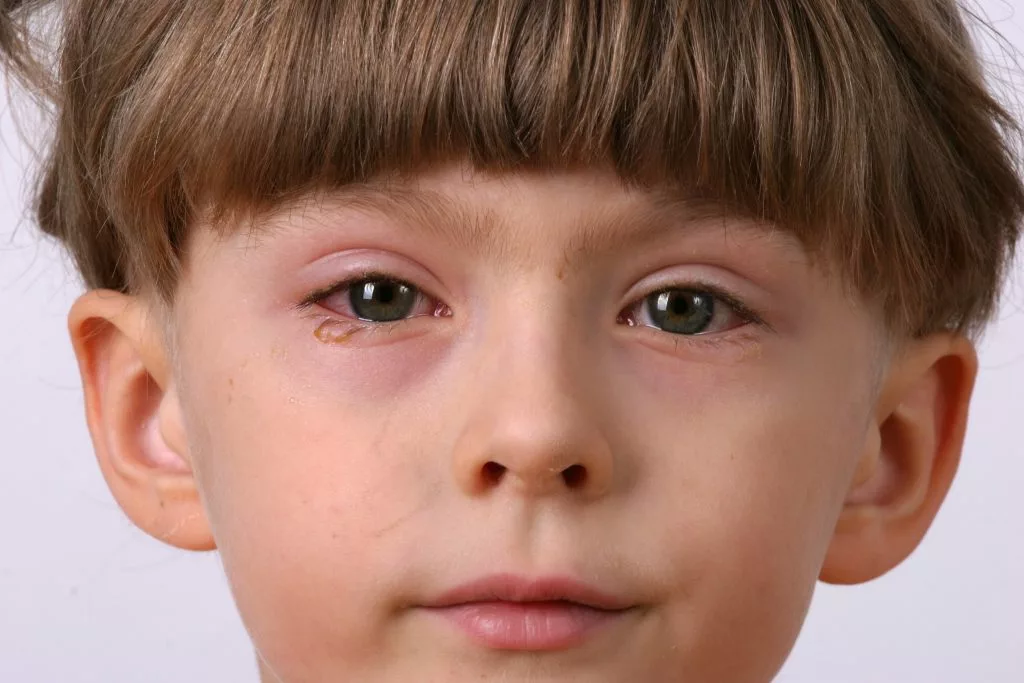
The condition is an inflammation of the conjunctiva. When bacterium, virus, or irritant enters the tissue, it causes swelling of tiny blood vessels. The irritation results in a pink colour change, according to Mayo Clinic.
Main types are:
- Viral Conjunctivitis – a highly contagious pink eye condition caused by viruses, similar to those that cause the common cold.
- Bacterial Conjunctivitis – produces a thick, yellow-coloured discharge, commonly caused by the bacterium Staphylococcus aureus.
- Allergic: Some allergens, such as dust, can cause this condition.
- Irritant Conjunctivitis: these are the common non-contagious pink eyes contributors.
Itchy eye in children: Signs to watch for
Next, the question is how to determine whether there are pink eye symptoms in kids. Do you see the following?
- Red, itchy eyes in kids
- Puffy eyelids
- Yellowish or greenish discharge from the eyes
- Feeling sensitivity to light or brightness
- Burning sensation in the eyes
- Thick or watery discharge that crusts overnight
According to KidsHealth, if there is bacterial pink eye in children, the eyes will produce a thicker, more viscous discharge. If there is a viral one, you will find watery discharge with cold-like symptoms.
Pink eye in Newsborns and babies
Pink eye in newborns and babies is usually caused by infections, blocked tear ducts or irritation.
It often shows up as redness, swelling as well as sticky discharge that may crust around the eyes.
Early attention is important, as some infections can require prompt medical treatment.
When to call a Doctor immediately for itchy eyes?
Seek medical help if your child has
- Severe redness, swelling or noticeable eye pain
- Sensitivity to light or difficulty opening the eyes
- Thick yellow or green discharge from the eyes
- Vision problems or blurred sight
- Symptoms lasting more than 1–2 days without improvement
- Rapid worsening or signs of infection like fever
Can my child go to school with pink eyes?
Yes, especially when it occurs due to bacterial infections. Both viral and bacterial Conjunctivitis can spread fast.
According to the American Academy of Ophthalmology, if a child has a bacterial pink eye, they should not return to school until their eyes are clear or they have been on antibiotic drops for the last 24 hours. Else, there is a high chance of the fellow classmates and teachers to develop the symptoms.
How does pink eye spread at home?
The disease can easily transmit through direct contact with eye discharge or by touching contaminated surfaces.
If you have viral conjunctivitis with cough and sneezing, it can spread through simple sneezing and coughing, as well as through direct contact.
When pink eye is not contagious
Pink eyes that aren’t caused by bacteria or viruses, don’t spread from person to person. These are:
- Caused by allergies (like pollen, dust or pet dander)
- Due to a blocked tear duct in newborns
- Triggered by irritants such as smoke, chlorine, or pollution
- Linked to dry eyes or environmental factors
- When redness is from eye strain or fatigue, not infection
What is the best pink eye treatment for kids by type?
The red eye treatment in children is based on its types:
- Viral pink eye treatment for kids
-
- Generally, antibiotics are not recommended to improve viral conductivities.
- For treatment, use damp, cool compresses to soothe itchy eyes.
- You are recommended to use preservative-free artificial tears to get comfort.
- For bacterial pink eye treatment
- Use antibiotic eye drops or ointment as prescribed by the doctor to improve symptoms within 24 hours.
- Be sure you complete the course for the full treatment to prevent a recurrence.
- Allergic pink eye
- Use an over-the-counter antihistamine eye drop.
- Rush to the nearest pediatric center
- To avoid the problem further, avoid common known allergens.
How can you prevent contagious pink eye?
Treatment for pink eye in children is easier than ever before.
Let your kid follow simple hygiene habits and professional advice, to easily cure pink eyes.
Make sure your kid follows a few things:
- frequent hand washing,
- no eye-rubbing,
- No sharing of towels,
- cleaning eyeglasses regularly,
- replacing the eye drops used during an infection,
not keeping your children in contact with someone who is struggling with pink eyes.
Visit Quick MD care in McKinney for an eye assessment or developmental screening. You will also get professional advice on pink eye prevention in children.
Pediatricians’ advice for pink eye in children
According to paediatricians – most cases of pink eye are not dangerous at all. However, parents should always follow reliable advice when handling kids with pink eyes. Mayo Clinic, QuickMD Pediatric care and KidsHealth are reliable sources for pink eye treatment in children to get true information.
FAQs
- How can I tell if my child has pink eyes?
Look for reddish or pinkish colour in the children’s white part of the eye. However, if there are cold symptoms along with it, then it is viral conjunctivitis in kids. Visit a paediatrician at QuickMD care for a proper diagnosis.
- Is pink eye contagious in children?
Yes. However, the allergic form of the disease is non-transferable as discussed above.
- What is the fastest way to treat pink eye in kids?
Antibiotic drops. However, viral pink eye requires 1 week of treatment.
- When should you visit a doctor if your child has an eye infection?
Immediate medical attention is required for a newborn. Older infants with eyelid swelling and fever require expert recommendation.
- What are the challenges for parents to manage eye symptoms for school-going children?
Since eye infections are contagious, they make it tough to manage schoolchildren. This is when, in addition to practicing hygienic habits, getting professional advice is important.
Don’t let your child suffer with uncomfortable situations when only one visit can resolve the issue. Visit QuickMD care now for expert advice to help your kid feel healthy. You can also call at 972-645-9400 or book an appointment.
Related Pediatric Health Guides from QuickMD Pediatric Care
-
Find the Best Pediatrician for School Physicals in McKinney, TX
https://quickmd-pediatriccare.com/find-the-best-pediatrician-for-school-physicals-in-mckinney-tx/ -
A Comprehensive Guide to Asthma Treatment Options Available at the Leading Asthma Clinic in McKinney
https://quickmd-pediatriccare.com/a-comprehensive-guide-to-asthma-treatment-options-available-at-the-leading-asthma-clinic-in-mckinney/ -
5 Signs Your Child Needs a Pediatric X Ray (And When to Call Us in McKinney)
https://quickmd-pediatriccare.com/5-signs-your-child-needs-a-pediatric-x-ray-and-when-to-call-us-in-mckinney/ -
How to Choose the Right Prenatal Clinic in McKinney for Your Needs
https://quickmd-pediatriccare.com/how-to-choose-the-right-prenatal-clinic-in-mckinney-for-your-needs/ - Pediatric Annual Physicals : https://quickmd-pediatriccare.com/why-pediatric-annual-physical-exams-are-essential-for-every-child-in-mckinney/
- Winters- the coughs and the colds : https://quickmd-pediatriccare.com/wet-vs-dry-coughs-in-children-what-u-s-parents-should-know-this-winter/
- Strep Throat – a common and acute problem among kids in McKinney, Texas, but with less awareness among parents: https://quickmd-pediatriccare.com/strep-throat-in-kids-symptoms-testing-and-when-antibiotics-are-needed/
 10101 Westridge Blvd, Suite 101